
Romanée-Saint-Vivant 2012 Grand Cru AC, MO, Domaine l'Arlot
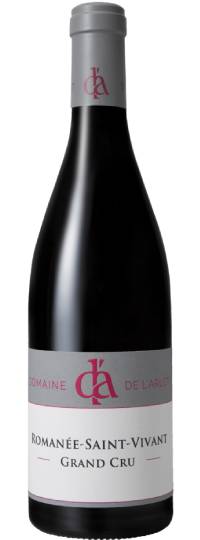
Country: France
Region: Burgund
Producer/appellation: Arlot
Wine type: Red wines
Year: 2012
Content: 75 cl
Organic/bio dynamic: No

95+

Stephen Tanzer

Vinous

Full dark red. Black raspberry, minerals, botanical herbs, flowers and pungent oak on the nose. On the palate, outstanding sweetness is perfectly balanced by harmonious acidity, giving this remarkably seamless wine a weightless quality. The vibrant, saline finish stains the palate with black raspberry and violet flavors. Has all the elements to make a great Burgundy. 11/2014


94-96

Neal Martin

Robert Parker/Wine Advocate

From the domaine’s 24 rows of vines just below Romanee-Conti, the 2012 Romanee-Saint-Vivant Grand Cru has a complex, mineral-rich nose that unfolds beautifully in the glass. The palate has just a little gas to shake off, but it is so alive with a sorbet-like freshness: blood orange mixed with vibrant red fruit. It reminds me of tasting some of the 2005 from barrel with its sense of energy and animation. Outstanding – alas just three barrels produced. As I have detailed before, it was a bottle of Nuits-Saint-Georges Clos de l’Arlot 1990 ordered at the Beaune institution “Ma Cuisine” that ignited my love for Pinot Noir. I followed the wines thereafter, always seeking the thrill of that particular wine, but perhaps like your first kiss it was impossible to replicate the impact of the first. In some years, I felt that the domaine had under-performed, perturbed by a greenness that afflicted some recent vintages, which rather tarnished my sentimental attachment to this grower. So to be honest, I did not quite know what to expect when I pulled into its courtyard after a three-year absence. Back then I had tasted Olivier Leriche but there has subsequently been a changing of the guard. This time it was technical director Jacques Devauges, who took over from Leriche in August 2011, who strode out to greet me on a sodden Monday morning. Previously Devauges has worked with Frederic Magnien and at Domaine de la Vougeraie in Burgundy, gaining an overseas perspective in Napa before that. He seems to have slipped into his role at Domaine de l’Arlot with ease, enthusing about their biodynamic practices that have been in place since 2004. He believes that the practices serve to enhance fruit quality and terroir expression. As an aside, when I encountered under-performing wines in the past, I conjectured whether the pursuit of such ideals had meant that the domaine had taken their eye off the fundamentals. Fortunately, in a challenging year such as 2012, it was clear that whether Rudolf Steiner has a role to play at Domaine de l’Arlot or not, Jacques has overseen an impressive set of wines. Down in the barrel cellar we discussed the growing season. “I think 2012 will be a reference year in terms of the difficulties we had,” he told me. “It started in February. The winter was not very cold, but in February it was -13 degrees for two weeks with a strong northerly breeze. It was so cold that some houses’ water pipes were frozen. It was difficult for the buds. The cold got into them and we lost a bit of crop. Budburst was at the end of March but in April, on the 14th and 17th, the temperature dipped down to zero degrees in the morning, and so we almost had spring frost. Afterwards, until July, we had 50% more rain than usual and it was very regular: perfect conditions for mildew. So up until then, it was similar 1993. But 2012 was more difficult because we had a strong pressure of oidium during July. “In 2012, you had to make good decisions about exactly when and how much to spray. In a normal year, if one of those decisions is bad you would still harvest something. But in 2012, if one of those factors was wrong then you could lose crop.” I asked, perhaps predictably, whether biodynamics had been a burden in 2012? “It was proof that biodynamic practices, using copper and some artisan preparations, can work. But believe me, there were some nights when I did not sleep well. Sometimes my wife left the window open at night when it was raining. I had to ask her to close it. I didn’t want to hear it. We also had hail on the 4th of July, especially in Clos de l’Arlot upon the young Pinot Noir vines and the whites, fortunately not the older vines at the bottom of the clos. Flowering was a week later than in Vosne and we had a lot of coulure that decreased the crop by 45%. August was very sunny, September quite warm, and so we had good condition in the end, with no botrytis. Yields were around 20 hectoliters per hectare on average. We have four people taking away the millerandage bunches on the sorting table. We found that as a consequence the stems has been exposed to the sun and fully lignified. These were taken aside and then added to the vat with the de-stemmed berries.” The 2012 harvest at Domaine de l’Arlot took place between September 20 and 28. Samples were taken directly from barrels that had been blended and undergone one racking. 12/2013